








If you’re planning a move to S/4HANA, evaluating EWM, or trying to improve an underperforming warehouse operation, you’re probably hearing a lot about modernization.
New capabilities. Better visibility. More automation. Stronger intelligence.
But before you decide which technology comes next, there’s a more important question to answer:
Is your operation actually ready for modernization?
That’s where many organizations struggle.
Technology projects often begin before there’s a clear understanding of how the operation performs today, what’s preventing better performance, or what the business will need to support in three years. The result can be companies migrating existing inefficiencies, inconsistent processes, and integration challenges into a brand-new platform.
The most successful SAP modernization initiatives don’t start with software selection. They start with a clear understanding of operational readiness.
What Does SAP Modernization Readiness Really Mean?
True modernization readiness requires organizations to understand how people, processes, systems, data, and physical operations work together today and whether they’ll support the future the business is trying to build.
For example, if two distribution centers handle the same products in completely different ways, is the future SAP environment expected to support both approaches? Or should the business standardize them first?
If inventory accuracy issues exist today, will implementing SAP EWM fix the problem? Or will those same issues simply become more visible in a new platform?
Modernization becomes much easier when leaders understand the difference between a technology challenge and an operational challenge.
Signs It May Be Time for an SAP Operational Readiness Assessment
Organizations usually don’t wake up one morning and decide they need a readiness assessment. Typically, there are warning signs.
One of the most common appears when facilities perform the same functions in entirely different ways. What started as local optimization often becomes a challenge during modernization because the business struggles to define a consistent future-state operation model.
Another sign appears when technology discussions begin before future-state requirements are fully understood. Teams start evaluating SAP EWM functionality, implementation approaches, and timelines before they’ve aligned on volume projections, fulfillment strategies, labor requirements, automation plans, or service-level expectations.
Data challenges are another common indicator. When inventory practices, location structures, item data, or units of measure vary across facilities, modernization projects often become more complex than expected.
Organizations should also pay attention when integrations and automation dependencies aren’t fully mapped. Warehouse operations today depend on a network of connected systems, from ERP and transportation platforms to automation, robotics, labor management, and carrier solutions. If you don’t fully understand those relationships, project risk increases dramatically.
Perhaps the most important signal is when operational performance is lagging, and nobody knows why. Low productivity, poor visibility, inventory issues, or low user adoption don’t automatically indicate the need for new technology. Until you understand the root causes, you can’t tell whether modernization is the right answer or just an expensive guess.
What Should You Evaluate Before SAP Modernization?
Successful modernization begins with understanding the operation itself.
Start with physical execution.
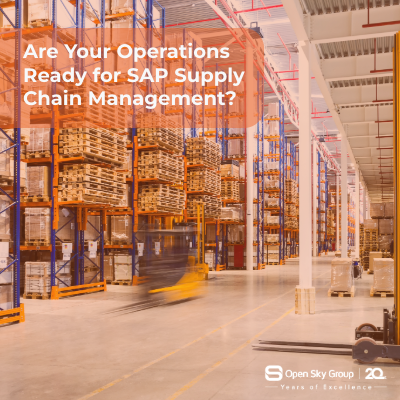
How does work move through receiving, storage, replenishment, picking, packing, loading, and shipping? Where are delays occurring? Which activities create the most exceptions?
Then look at the processes supporting those activities. Are they standardized across facilities? Are they documented and measurable? Or are they heavily dependent on tribal knowledge and local workarounds?
People matter just as much as processes.
Many organizations underestimate the impact that training, ownership, accountability, and change management have on modernization success. Even the best technology struggles when teams aren’t aligned around future-state expectations.
Data should receive the same level of scrutiny. Master data, inventory information, reporting structures, and governance models all influence the success of downstream processes and technologies.
Finally, organizations need to understand how systems and integrations support execution today. Modern supply chains rely on constant communication between ERP, warehouse, transportation, labor, automation, carrier, and customer-facing systems. Weaknesses in those connections often create hidden barriers to modernization.
Why Warehouse, Transportation, and Labor Must Be Evaluated Together
One of the most common mistakes organizations make is evaluating warehouse, transportation, and labor operations independently.
The reality is they’re deeply connected.
Changes to warehouse processes affect dock operations, transportation planning, workforce requirements, and customer service performance.
Transportation decisions influence warehouse workloads, staffing requirements, and fulfillment priorities.
Labor constraints can limit throughput regardless of how sophisticated the technology may be.
This is why organizations often struggle when modernization initiatives are approached from a single-system perspective. To understand readiness, leaders need to achieve visibility across the entire execution environment, not just one functional area.
Why Open Sky Group Starts with the Operation
For more than 20 years, Open Sky Group has helped organizations improve supply chain execution across warehouse management, transportation management, and labor management environments. As an SAP PartnerEdge Open Ecosystem — Build Member, Open Sky Group brings a unique perspective to modernization efforts: understanding the operation before recommending the technology.
Rather than beginning with a predefined solution, Open Sky Group’s Operational Readiness Diagnostic examines the factors that truly influence modernization success:
- Physical operations
- Process consistency
- Organizational readiness
- Data quality
- Systems and integrations
- Future-state requirements
The objective isn’t to determine whether you should implement SAP EWM, TM, or another solution. The objective is to understand what’s holding the business back today and what needs to change before making a major technology investment.
Only then can organizations confidently determine what should be optimized, standardized, redesigned, or modernized.
The Best SAP Modernization Projects Begin Before Technology Selection
The organizations that realize the greatest value from SAP modernization tend to follow a similar path.
They don’t start by asking: “Which system should we implement?”
They start by asking: “What does our operation need to become?”
That shift changes everything.
It helps leaders uncover hidden risks before they become implementation problems. It reduces unnecessary customization. It improves alignment between operations and IT. Most importantly, it creates a modernization roadmap grounded in business outcomes rather than assumptions.
Before you commit significant budget, time, and resources to SAP modernization, make sure you understand where your operation stands today.
Not Sure If Your Operation Is Ready?
Open Sky Group can help you evaluate your readiness across operations, processes, people, data, systems, and integrations to identify risks, uncover opportunities, and build a modernization roadmap with confidence.
Schedule an SAP Operational Readiness Discussion with Open Sky Group and discover what’s really driving performance and what should happen before your next major SAP investment.